Recipe Trevor Baca Recipe Trevor Baca

RECIPE: Micheladas "To Taste"

A Michelada is like a Bloody Mary - minus the hard liquor. A beertail, if you will.

And the best part of a Michelada is that you can write the recipe - I'll just lay the base.

A Michelada is like a Bloody Mary - minus the hard liquor. A beertail, if you will.

And the best part of a Michelada is that you can write the recipe - I'll just lay the base. Allow me to explain - a Michelada is a beer fortifified with tomato juice, lime, chile and flavorings and YOU get to pick the proportions. Want something more spicy? Just add more chili pequin or arbol to the rim.. want something more sour? Add more lime. ETC.

Ingredients:

*For one serving. All ingredients to taste.

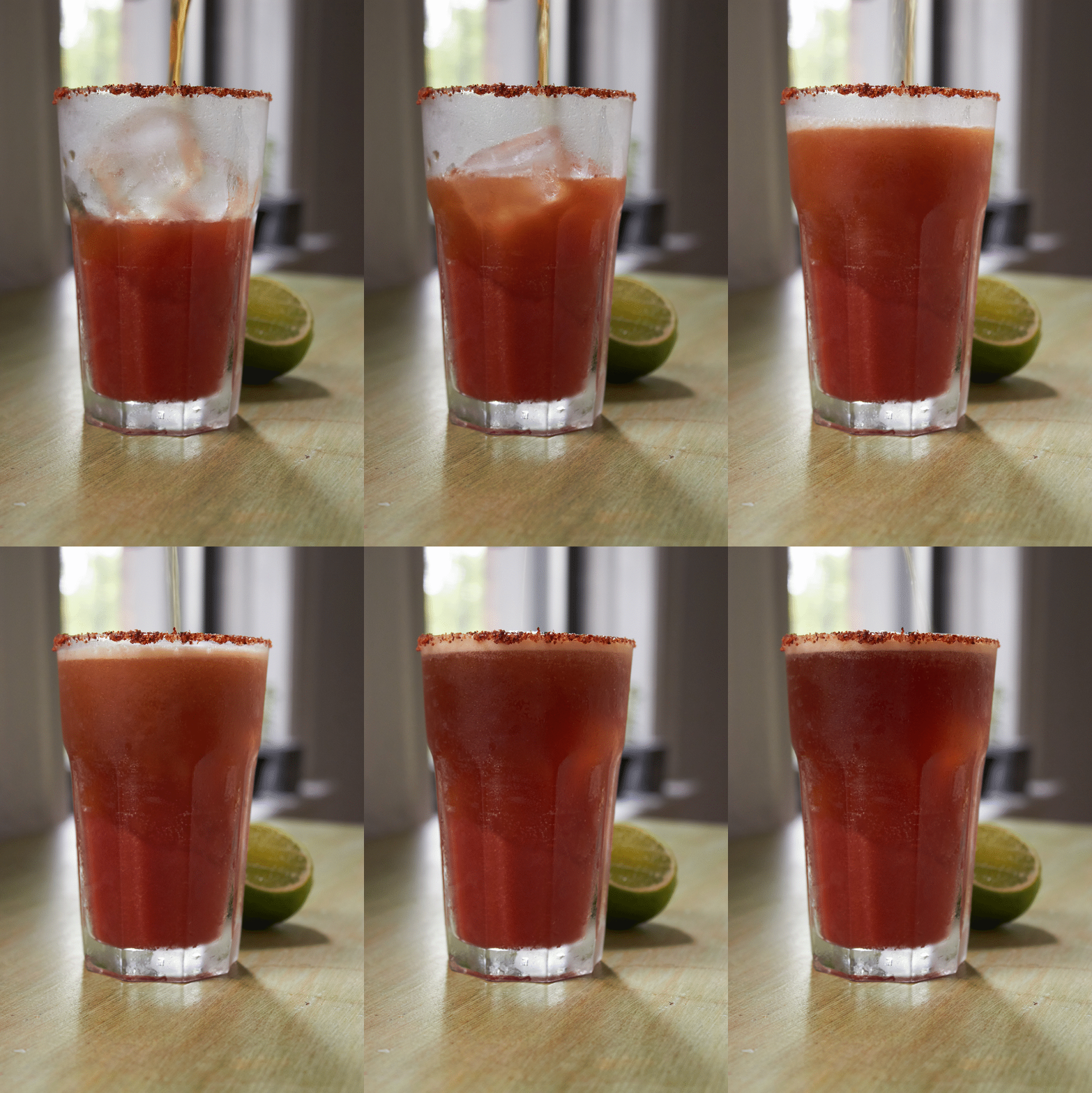
Michelada Gif

MICHELADA

  • 10 Chili pequin or 3 chili de arbol toasted on a comal until fragrant OR Sal de Muchos Chiles Rimming Salt

  • Lime juice to taste

  • 2 ounces Tomato juice

  • 2 Dashes of Worcestershire

  • Salt

  • Hot sauce (like Valentina of Cholula) to taste

  • 1 12-ounce bottle of Mexican Lager (claro or obscuro is fine)

Method:

  1. Place glassware into the freezer for at least ten minutes. 

  2. Toast the chili pequin or arbol on a comal until fragrant. Once cooled, chop into a fine powder with a pinch of salt.

  3. Squeeze lime juice onto a plate, dip the frozen glass rim into the lime juice and then the chili powder to rim the edge.

  4. Remove the glass from the freezer. Add tomato juice, lime, Worcestershire, hot sauce and stir the mixture well. This should equal approx. 1/3 of the volume of the drink. Add ice cubes 3/4 of the way up the glass. 

  5. Pour the lager over the ice cubes and stir the drink to blend both layers. You will have beer leftover which is the best part of a Michelada, it changes flavor and consistency as you continue to dilute the tomato mix with the beer. 
     

Read More
Recipe Trevor Baca Recipe Trevor Baca

RECIPE: Puerco en Chile Colorado

This family recipe hails from the northern states of Mexico (Chihuaha, Coahuila, Durango) and is often seen on many restaurant menus in the US. The cuisine of The North is much like the climate where the ingredients come from - sparse and simple.

This family recipe hails from the northern states of Mexico (Chihuaha, Coahuila, Durango) and is often seen on many restaurant menus in the US. The cuisine of The North is much like the climate where the ingredients come from - sparse and simple. The simplicity of the northern gastronomy is refreshing, and lends itself to a non-complicated cooking style allowing for more exploration with meat cuts, ingredients etc. Feel free to improvise with meat cuts - spare ribs would be excellent! 

guajillos

GUAJILLOS

Submerge the chiles in water and bring to a boil, lowering the temp to a slow simmer for 10 minutes.

Cooking time: approximately 1 hour, 15 minutes

Ingredients:

  • 7 dried guajillo chiles
  • 2 puya chiles
  • 2 large garlic cloves
  • 1 tablespoon cumin
  • 1 teaspoon dried Mexican oregano
  • 1 tablespoon lard
  • 1.5lbs of boneless pork, cut into 2 inch cubes
  • 1 tablespoon flour
  • Salt to taste
  • Sliced avocado

Tortillas de harina en comal.

Method:

  1. Toast the chiles on a comal over medium height, until they are fragrant and a darker shade of brown. Don't let them burn, as the entire dish will have a bitter taste. 
  2. Submerge the chiles in water and bring to a boil, lowering the temp to a slow simmer for 10 minutes. Strain the chiles and put into a blender with the garlic, oregano, cumin and 1 cup of water. Blend until smooth.
  3. While the chiles simmer, heat the lard in a large pot (I prefer cast iron) over medium-high heat and once smoking, sear the meat in batches (so as not to cool the pan) until the meat is browned. Add all the pork back to the pan. Lower the heat and sprinkle the flour over the meat, stirring constantly so that the flour doesn't burn.
  4. Raise the heat to medium and place a mesh strainer over the pot. Pour the blended chile mixture over the meat, straining out any thick chili skin pieces. Remove the strainer and pour 3 cups of water into the pot. Bring the mixture to a boil, stirring constantly. Lower to low-medium and let the sauce cook for 1 hour or until the meat is tender, stirring occasionally. 
  5. Garnish with sliced avocado. Serve with flour tortillas, beans and rice.
Read More
Book Review Trevor Baca Book Review Trevor Baca

BOOK REVIEW: The Mezcal Rush - Explorations in Agave Country by Granville Greene

Granville Green's The Mezcal Rush: Explorations in Agave Country captures his journey into the often misunderstood alcoholic beverage native to Mexico. Published this year, the 286 page exploration follows Greene's personal journey with the intoxicant that he once drank in his college days known as "the drink with the worm in it," to the esteemed cultural heritage that makes mezcal the fashionable drink it is today. 

Nothing plays the symphony of smoke quite like mezcal, and Granville Green's The Mezcal Rush: Explorations in Agave Country captures his journey into the often misunderstood alcoholic beverage native to Mexico. Published this year, the 286 page exploration follows Greene's personal journey with the intoxicant that he once drank in his college days known as "the drink with the worm in it," to the esteemed cultural heritage that makes mezcal the fashionable drink it is today. 

After sampling a bottle of Del Maguey in a Santa Fe wine shop, Greene was intrigued to know more about the complex spirit he drank. "It was just completely different from anything I'd ever tasted, and I felt like it was telling me a story, but in an unfamiliar language," Greene writes. Ron Cooper's Del Maguey has become a commonality in the American market. A true pioneer, Cooper has acted as a middleman, importing "single village" mezcal to the US market with bottle prices well above $150 USD. Del Maguey sparked a lust for Greene to travel to Oaxaca and Guerrero to study the complexities of the spirit.

"I consumed a traditionally produced alcoholic spirit that was a thread in someone else's communal web, I was somehow connected to that community myself..."  pg. 192

Granville Greene,  pg. 192

From Greene's findings he explains that tequila is simply a type of mezcal but ONLY from the blue agave A. tequiliana variety. The pina, or heart of the plant, is steamed not smoked in a earthen pit and eventually fermented and then distilled. Mezcal can be made from not just the blue agave, but from 30 varieties of agave! The complexity doesn't stop there - similar to a terroir, mezcal production can be nuanced by the type of soil it is grown in, which yeasts from the surrounding plants affect the flavor, what type of still is used to ferment it... the list goes on and on.

Greene's most impactful take-away for me was the sustainability of the entire production of the spirit. As "entrepreneurs" like Ron Cooper continue to claim the artistry of the maestros mezcaleros as their own, the communities who need mezcal to survive will not be properly compensated. The greed for mass production in the tequila industry is allowing big business to steal espadin plants in unregulated Oaxaca and Guerrero. Smaller communities cannot afford the expenses associated with the DOC and will never be able to market nor export their product.

 The Mezcal Rush: Explorations in Agave Country was a special read which does the mezcal industry justice and will make me think twice before picking up a bottle of Ron Cooper's Del Maguey products, or at least make me think of the mezcalero who produced it.

Buy the book here.

Read More